Changing Heater Scuttle 'Foliage Cover' Seal
From THE Corrado Forum Knowledge Base
This article is for guidance only, neither myself or the Corrado forum will be held responsible for any mistakes. This article is intended to allow all levels of skill to be able to dive in and change the seal so if I am saying things that appear obvious to you they may not be to everyone.
Contents |
Why Should I Bother?
The newest Corrado is now over 12 years old, the seal that prevents water coming into the car from the area around the scuttle is made of foam, this will have age hardended and will probably be leaking slightly. It will cost you around £15 to change all the parts with the option of adding a pollen filter for another £30. It should take you around an hour at most and will prevent you from spending days trying to get your carpets dried out, as well as improving the life of your heater motor due to it not being filled with water. The pollen filter stops you getting a face full of crud when you put the heater blower on as well as helping those will hayfever.
Signs of a Failed/Failing Seal
- Water in the car
- Noisy heater motor bearings (Rumbling or squeaking)
- Smell of compost/earthy smell
- Tendancy for the inside of windscreen to condensate heavily
Parts You Will Need
- Foliage cover seal 191 819 166 around £6
- 5 x Trim Clips For the Windscreen Lower Cover Panel 535 853 832 A 03C around £2.30
- 5 x Trim Clip Insets for the windscreen lower cover panel 535 853 837 around £1.18
- Optional Jetex brand pollen filter, available from the Jetex website: Jetex Pollen Filter For Corrado around £27 delivered
Tools Required
- Philips screwdriver
- Flat blade screwdriver for levering
- Small hoover
- Rag for cleaning bits
Preparation for Job
Get the parts you need from your friendly neighbourhood stealer, I mean VW dealer – you will need to pay them a visit to get the parts as the seal and clips will need to be replaced and are only available from VAG. Get your tools together, hope it doesn't rain if you are doing this job outside and then sit down and have a cuppa and read this through before you start.
Gaining Access to the Foliage Cover
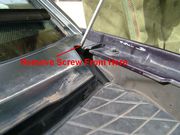
Your first task is going to be to get all the trim out of the way that covers the 'foliage cover.' Pull the bonnet release (driver's side footwell) and open the bonnet. You will need to remove the screw from the lower windscreen trim on the passenger side of the car.

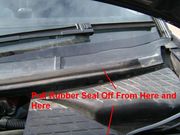
The two rubber seals that run along the back of the engine need to be pulled off from the passenger side to around half way. You can remove these completely if it makes life easier for you. Pay attention to how the plastic scuttle cover is fitted to the car, it is difficult to photograph so you will need to remember how it fits on the two sections that are covered by the rubber seals.
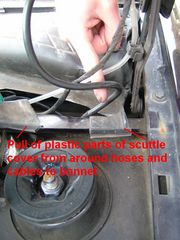
Next you need to ease the scuttle cover sections that wrap around the bonnet cables as per the picture.
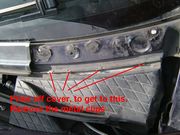
Prise off the lower windscreen trim cover on the passenger side (short one that had the screw in it) you will either break the brittle old plastic trim clips or you will more than likely find some big blobs of silicon as in the picture. You will need to clean this up to fit the 'proper' trim clips as listed above. Make sure the holes in the bulkhead are plugged with either the correct trim clips or with silicon to prevent water ingress. Next lever the metal clips from the scuttle cover, keep hold of these you can refit them later. You may find you need to lift the centre lower windscreen trim panel to at the passenger side end to remove some of these metal clips.
Removing the Foliage Cover
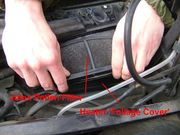
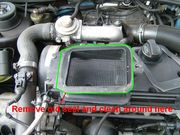
You should then see something like the picture below, note the optional Jetex pollen filter, these are a very tight fit but well worth the extra effort and investment.
The 'foliage cover' is removed by unclipping the sliding clip as shown in the pic below, a flat blade screwdrive is ideal for this.
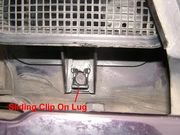
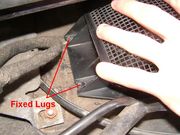
You can then remove the 'foliage cover' by lifting the end with the sliding clip up and pulling towards the passenger wing to disengage the lugs at the other end of the cover.
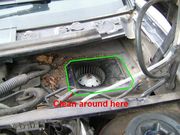
You should then see all something like the pic below, use a vacuum (a dustbuster wet and dry is ideal) to remove all the bits of leaves etc from around the opening into the heater system. Clean around the opening removing all the gunk so the new seal will work correctly. As you can see from the picture below the heater motor is the first thing to get wet if these leak.
Replacing the Foliage Cover Seal
Next you will need to clean up the underside of the 'foliage cover' you have just removed. You should be able to pick off the old seal quite easily as it should be very brittle, make sure you also remove all the gunge and glue left over. Now is a good time to give it a quick wash to clean it up!
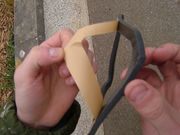
Next job is stick the new seal onto the bottom of the 'foliage cover'. You split the seal from its backing paper as shown below.
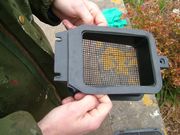
Simply affix the seal to the 'foliage cover'.
Rebuilding
As Haynes say, 'refit is the reverse of removal' in this case it really is!
The 'foliage cover' is refixed onto the car by sliding the end with two cutouts in at an angle until it stops and then push down on the end with the sliding clip. You will find that you need to push down quite hard to ensure the clip is low enough to sit below the lug. A screwdriver is the ideal way to push the clip to engage the lug.
If you are fitting a pollen filter you will find it tricky to refit the plastic scuttle cover, it will go but will need to be worked back under the windscreen end of the bulkhead. The scuttle cover has a section that goes under the windscreen end of the bulkhead as well as a 'U' shaped section that sits over the top of the lip at the front.
Refit the metal clips with the receiving section of the clip facing towards the front of the car. Refit the windscreen lower trim panel by engaging it in the metal clips first, you can slide it left and right to line the screw hole up.
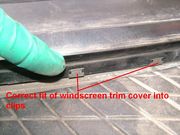
Finally refit the screw and put the rubber seals back on, get a brew and admire your work and sense of achievement.
Thanks to Supercharged for the loan of the Tdi for the pictures as well doing the work on his car!
--Yandards 16:08, 10 April 2007 (BST)